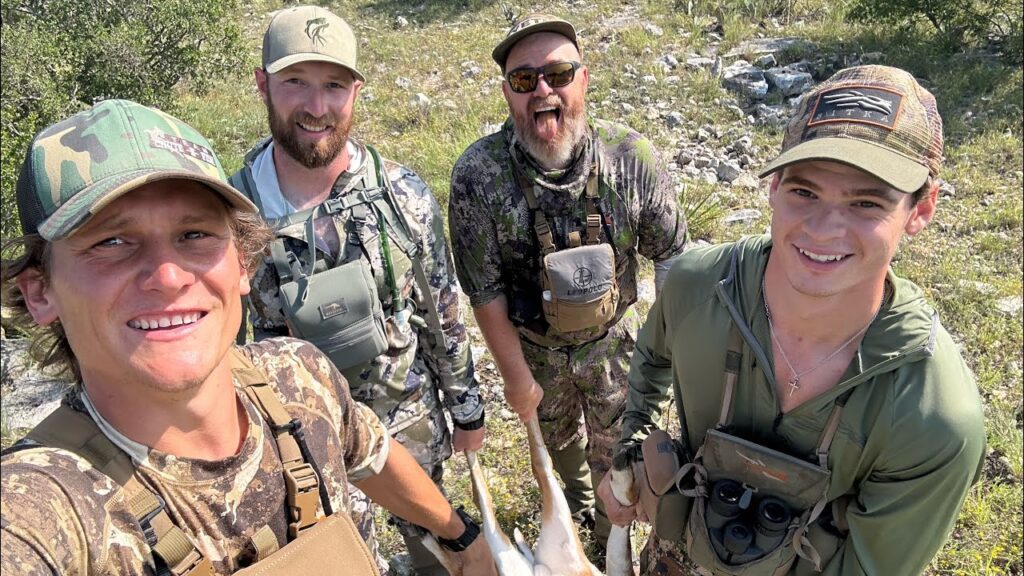
Episode 2 was pure chaos — roaring axis, fighting blackbucks, multiple animals, and the kind of fast-paced hunting that keeps you sharp.
Roaring Axis and Fighting Blackbucks
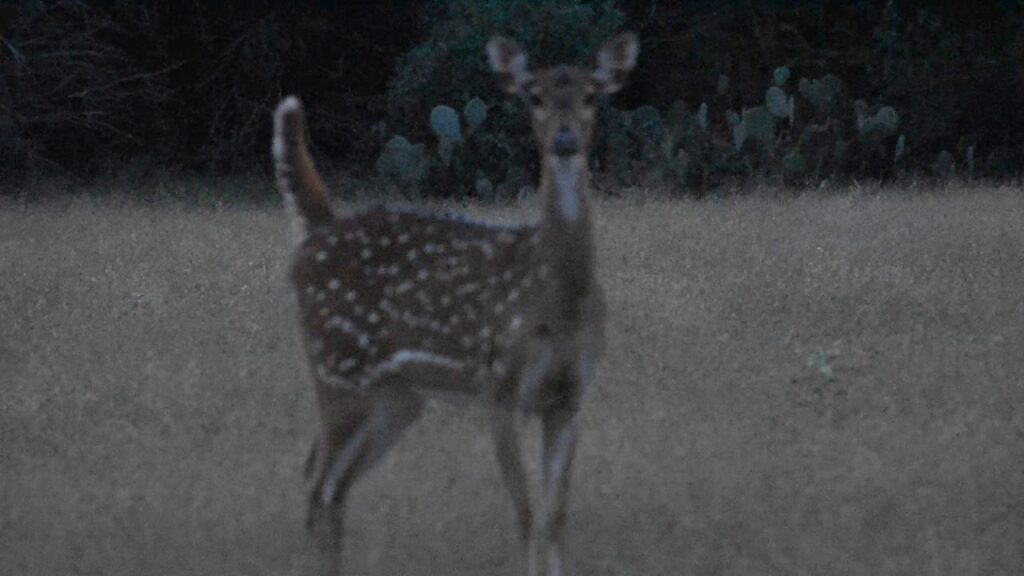
John was behind the camera because the night before I’d tagged a doe. We didn’t have much time to pursue it once the rut kicked in. We heard some serious roaring from what sounded like an axis buck, so we pivoted and headed that direction. By last light, we found two blackbucks fighting through a fence — wild to witness and tough to film with a handheld camera in low light.
The action started early the next morning. Lots of roaring already. Lots of water movement. The exotics were in full rut mode, and that meant opportunities — if we could stay flexible and aggressive.
Multiple Encounters
We spotted axis bucks roaring across the landscape, blackbucks in aggressive postures, and from one vantage point we could glass a whiteTail up on a hill. I even spotted a pig. Stalking free-range exotics means you’re never hunting just one animal. You’re hunting a landscape where multiple species are moving, vocalizing, and giving away their positions.
“There’s a lot of roaring already this morning, so we decided to come over here.”
This episode proved that free-range exotic hunting rewards aggression and adaptability. You can’t stick to a plan when the rut is on and animals are broadcasting their location every few minutes. You have to hunt what you hear and see right now.
If you’re curious how this style compares to blind hunting, check out my land setup video or my successful blackbuck hunt at 72 yards where all this scouting came together. Free-range hunting builds a different skill set — and Episode 2 showed exactly why I love it.
American Country Outdoors documents the real learning curve of exotic hunting, and these moments are where the education happens.
About The Author

Originally published .